Polycube是一个基于 eBPF 和 XDP 技术的开源软件框架,用于在Linux内核中构建快速、灵活的网络功能。
介绍
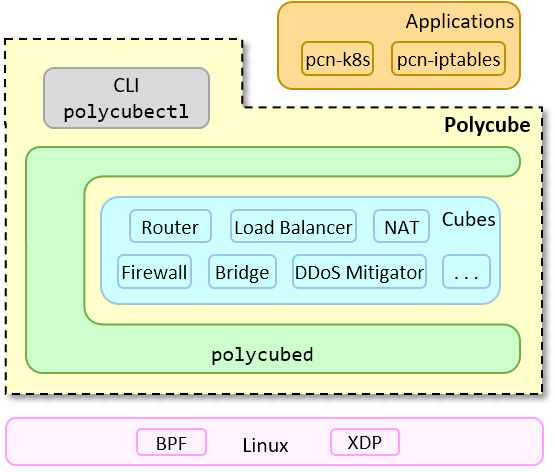
Polycube 是一个基于 Linux 的开源软件框架,提供快速且轻量级的网络功能,比如网桥(bridge)、路由器(router)、网络地址转换(NAT)、负载均衡器(load balancer)、防火墙(firewall)、DDoS 缓解器等。
架构:
- 交互方式:
- polycubectl,命令行工具,用于人工交互
- polycubed,REST API 守护进程,接收 polycubectl 或其他外部指令,用于自动交互
- 架构
- 应用层:应用程序,如 pcn-k8s, pcn-iptables,通过调用 polycubed 或 CLI 来驱动底层 cubes
- 控制与管理层:polycubectl/polycubed,人工/自动控制工具
- 功能模块层:各种可用的 “Cubes” (具体的网络功能模块)
- 底层:基于 BPF/XDP 的 Linux 内核支撑
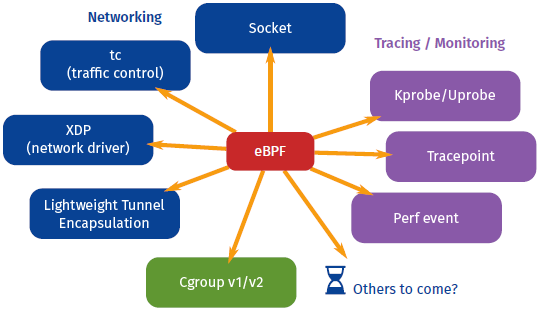
eBPF
eBPF 程序可以加载到指定的内核代码路径(如 tc、XDP 等)中,当执行该代码路径时,则会执行对应的 eBPF 程序。
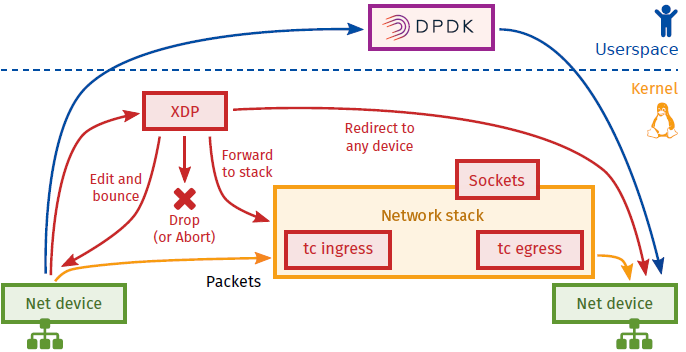
PolyCube 主要利用的 XDP 和 tc 挂载 eBPF 程序
XDP (eXpress Data Path) BPF
- 位置: 挂载在网卡驱动层,是数据包进入的最早阶段
- 能力: 性能极高,主要用于高速过滤、DDoS 防护和简单的负载均衡
- 方向: 作用于 Ingress 方向
- 返回值: 程序可以返回
XDP_DROP (丢弃)、XDP_PASS (放行到协议栈)、XDP_TX (原路返回)、XDP_REDIRECT (重定向到其他接口)
TC (Traffic Control) BPF
- 位置: 挂载在内核网络协议栈的 TC 层,位于网络驱动层
- 能力: 可以访问更丰富的数据包元数据,适合进行复杂的流量控制、分类、整形(QoS)、策略执行等
- 方向: 同时支持 Ingress 和 Egress 两个方向
- 返回值: 程序可以返回
TC_ACT_OK (放行)、TC_ACT_SHOT (丢弃)、TC_ACT_REDIRECT (重定向) 等动作
开发
以 pcn-iptables 为例
函数注册
CMake 构建时,将 datapaths 下的代码内容加载成变量
1
2
3
4
5
6
7
8
9
10
11
12
13
14
15
16
|
load_file_as_variable(pcn-iptables datapaths/Iptables_ActionLookup_dp.c iptables_code_actionlookup)
load_file_as_variable(pcn-iptables datapaths/Iptables_BitScan_dp.c iptables_code_bitscan)
load_file_as_variable(pcn-iptables datapaths/Iptables_ChainForwarder_dp.c iptables_code_chainforwarder)
load_file_as_variable(pcn-iptables datapaths/Iptables_ChainSelector_dp.c iptables_code_chainselector)
load_file_as_variable(pcn-iptables datapaths/Iptables_ConntrackLabel_dp.c iptables_code_conntracklabel)
load_file_as_variable(pcn-iptables datapaths/Iptables_ConntrackMatch_dp.c iptables_code_conntrackmatch)
load_file_as_variable(pcn-iptables datapaths/Iptables_ConntrackTableUpdate_dp.c iptables_code_conntracktableupdate)
load_file_as_variable(pcn-iptables datapaths/Iptables_Horus_dp.c iptables_code_horus)
load_file_as_variable(pcn-iptables datapaths/Iptables_IpLookup_dp.c iptables_code_iplookup)
load_file_as_variable(pcn-iptables datapaths/Iptables_L4PortLookup_dp.c iptables_code_l4portlookup)
load_file_as_variable(pcn-iptables datapaths/Iptables_InterfaceLookup_dp.c iptables_code_interfacelookup)
load_file_as_variable(pcn-iptables datapaths/Iptables_L4ProtocolLookup_dp.c iptables_code_l4protolookup)
load_file_as_variable(pcn-iptables datapaths/Iptables_Parser_dp.c iptables_code_parser)
load_file_as_variable(pcn-iptables datapaths/Iptables_TcpFlagsLookup_dp.c iptables_code_tcpflagslookup)
|
pcn-iptables
Ingress 数据包
1
2
3
4
5
6
7
8
9
10
11
12
13
14
15
16
17
18
19
20
21
22
23
24
25
26
27
28
29
30
31
32
33
34
35
| Packet in (TC/XDP ingress)
↓
┌────────────────────┐
│ Parser_ingress │
│ Iptables_Parser_dp │
└─────────┬──────────┘
↓
_HORUS_ENABLED?
├── YES ─────┐
↓ ↓
┌──────────────┐ ┌──────────────────┐
│ Horus_dp │ │ ChainSelector_dp │
└───────┬──────┘ └───────┬──────────┘
↓ ↓
┌────────────────────────────────────┐
│ ConntrackLabel_dp (ingress) │
└──────────────┬─────────────────────┘
↓
┌───────────────────────────┐
│ ChainForwarder_dp │
└──────────────┬────────────┘
↓
_NEXT_HOP_INPUT_1 / _NEXT_HOP_FORWARD_1
↓
┌────────────────────────────────────┐
│ Rule chain subprograms │
│ BitScan → IpLookup → InterfaceLookup │
│ → ConntrackMatch → L4ProtocolLookup │
│ → L4PortLookup → TcpFlagsLookup │
│ → ActionLookup │
└──────────────┬─────────────────────┘
↓
_CONNTRACKTABLEUPDATE_INGRESS
↓
RX_OK / RX_DROP
|
1. 整体架构
1.1 系统分层
1
2
3
4
5
6
7
8
9
10
11
12
13
14
15
16
17
18
19
20
21
22
23
24
| ┌─────────────────────────────────────────────────┐
│ 用户态 (Userspace API) │
│ REST API / CLI 接口 │
│ ├─ 添加/删除规则 │
│ ├─ 配置链(INPUT/FORWARD/OUTPUT) │
│ ├─ 查询统计信息 │
│ └─ 启用/禁用功能(Horus, Conntrack) │
└────────────────┬────────────────────────────────┘
│
┌───────┴────────┐
↓ ↓
Control Plane Data Plane
(Iptables.cpp) (BPF Programs)
│ │
┌────┴─────────┐ ┌───┴──────────────────┐
│ Chain │ │ Kernel (eBPF) │
│ Manager │ │ Parser/Lookup/... │
│ │ │ AttackPoint Hook │
│ Rule │ │ (TC/XDP) │
│ Compiler │ │ │
│ │ │ BPF Tables (Maps) │
│ BPF Code │ │ per_cpu_array │
│ Generation │ │ hash / lpm_trie │
└──────────────┘ └────────────────────────┘
|
1.2 关键类结构
1
2
3
4
5
6
7
8
9
10
11
12
13
14
| Iptables (主容器)
├─ 3 个 Chain 对象
│ ├─ INPUT
│ ├─ FORWARD
│ └─ OUTPUT
│
├─ 每个 Chain 包含 N 个 ChainRule 对象
│ ├─ Rule 0: src=10.0.0.1, dst=10.0.0.2, action=DROP
│ ├─ Rule 1: src=10.0.0.3, dst=*, action=ACCEPT
│ └─ Rule N: ...
│
└─ SessionTable (连接追踪表)
├─ (src, dst, proto, sport, dport) → 连接状态
└─ 状态:NEW / ESTABLISHED / RELATED / INVALID
|
2. 规则结构
2.1 ChainRule 的匹配维度
每条规则可以指定以下匹配条件:
1
2
3
4
5
6
7
8
9
10
11
12
13
14
15
16
17
18
19
20
21
22
23
| struct ChainRule {
std::string src;
std::string dst;
std::string l4proto;
uint16_t sport;
uint16_t dport;
std::string tcpflags;
std::string inIface;
std::string outIface;
ConntrackstatusEnum conntrack;
ActionEnum action;
};
|
2.2 规则匹配过程
示例规则链:
1
2
3
4
5
6
| Rule ID | Src IP | Dst IP | Proto | DPort | Action
--------|-------------|-------------|-------|-------|--------
0 | 10.0.0.0/24 | 192.168.0.1 | TCP | 443 | DROP
1 | * | 10.0.0.1 | ICMP | * | ACCEPT
2 | 172.16.0.0/16 | * | UDP | 53 | ACCEPT
3 | * | * | * | * | DEFAULT
|
匹配流程示例(数据包 10.0.0.5 → 192.168.0.1:443 TCP):
1
2
3
4
5
6
7
8
9
10
| ┌─ BitScan 初始化:bits = 0x111...1 (所有规则)
│
├─ Rule 0 匹配:src ✓, dst ✓, proto ✓, dport ✓ → 规则 0 "中奖"
│ bits 更新为:0 号位保留,其他置 0
│
├─ BitScan 扫描找到最低的 1 位 → 规则 0
│
├─ ActionLookup → 查询规则 0 的动作 = DROP
│
└─ 返回 DROP(数据包被丢弃)
|
3. 控制平面工作原理
3.1 规则编译流程
用户通过 REST API 添加规则:
1
2
3
4
5
6
7
8
9
10
11
12
13
14
15
16
17
18
19
20
21
22
23
24
25
26
27
28
| POST /iptables/chain/INPUT/rule
{
"id": 0,
"src": "10.0.0.0/24",
"dst": "192.168.0.1",
"l4proto": "tcp",
"dport": 443,
"action": "DROP"
}
↓
Chain::addRule()
↓
ChainRule 对象创建
├─ 解析 CIDR (10.0.0.0/24)
├─ 存储匹配条件
└─ 触发 Chain::updateChain()
↓
Chain::updateChain()
├─ 获取所有规则
├─ 生成 BPF 规则代码
├─ 编译成 BitScan / IpLookup / ... 的 BPF 代码
└─ 调用 Parser::reload() / ChainSelector::reload() 等
↓
Program::reload()
├─ 调用 iptables_.reload(code, index)
└─ 加载新的 eBPF 程序到内核
|
3.2 规则代码生成示例
规则 0:src=10.0.0.0/24, dst=192.168.0.1, proto=TCP, dport=443, action=DROP
控制平面生成对应的 BPF 匹配代码:
1
2
3
4
5
6
7
8
9
10
11
12
13
14
15
16
17
|
struct lpm_k key = {
.netmask_len = 24,
.ip = htonl(0x0A000000)
};
struct elements *result = ip_srcTrie_INPUT.lookup(&key);
if (result != NULL) {
__be32 dst_check = htonl(0xC0A80001);
if (pkt->dstIp == dst_check) {
if (pkt->l4proto == IPPROTO_TCP && pkt->dport == htons(443)) {
(result->bits)[0] |= (1ULL << 0);
}
}
}
|
3.3 Interactive vs Batch Mode
Interactive Mode(交互模式,默认):
1
| 添加规则 → 立即编译 → 立即加载到内核 → 规则生效
|
Batch Mode(批处理模式):
1
2
3
4
| 添加规则 1 → 内存更新
添加规则 2 → 内存更新
...
调用 applyRules() → 编译所有规则 → 加载到内核
|
4. 数据平面工作原理
4.1 数据包入站处理(Ingress)
1
2
3
4
5
6
7
8
9
10
11
12
13
14
15
16
17
18
19
20
21
22
23
24
25
26
27
28
29
30
31
32
33
34
35
36
37
38
39
40
41
42
43
44
| 网络包进入 NIC
↓
TC/XDP Hook 触发(attach 点)
↓ [1] Parser
├─ 解析以太网/IP/L4 头
├─ 填充 packetHeaders 结构
└─ 调用 _CHAINSELECTOR 或 _HORUS(如果启用)
↓ [2] ChainSelector (如果没启用 Horus)
├─ 查看包的目标 IP
├─ 检查是否为本机地址?
│ ├─ YES → goto INPUT chain
│ └─ NO → goto FORWARD chain
└─ 初始化 sharedEle (规则位向量)
↓ [3] ConntrackLabel
├─ 查询连接追踪表
├─ 确定连接状态 (NEW/ESTABLISHED/...)
└─ 调用规则链处理
↓ [4] 规则链处理 (_NEXT_HOP_INPUT_1 或 _NEXT_HOP_FORWARD_1)
├─ BitScan → 找最低匹配规则
├─ IpLookup → 检查 src/dst IP
├─ InterfaceLookup → 检查入站接口
├─ ConntrackMatch → 检查连接状态
├─ L4ProtocolLookup → 检查 L4 协议
├─ L4PortLookup → 检查源/目标端口
├─ TcpFlagsLookup → 检查 TCP flags
└─ ActionLookup → 查询动作 (DROP/ACCEPT)
↓ [5] ChainForwarder
├─ 根据 forwardingDecision
│ ├─ INPUT_LABELING → return RX_OK 或 RX_DROP
│ └─ FORWARD_LABELING → return RX_OK 或 RX_DROP
└─ 如果是 ACCEPT,调用 ConntrackTableUpdate
↓ [6] ConntrackTableUpdate
├─ 如果是 ACCEPT,更新连接追踪表
├─ 记录连接信息 (src/dst/sport/dport/proto)
├─ 设置 TTL 和状态
└─ 返回 RX_OK
↓
数据包发往应用或转发
|
4.2 数据包出站处理(Egress)
1
2
3
4
5
6
7
8
9
10
11
12
13
14
15
16
17
18
19
20
| 应用发送包 / 转发包出去
↓
TC/XDP Hook 触发(egress 点)
↓ [1] Parser (egress)
├─ 解析包头
├─ 填充 packetHeaders
└─ 调用 _CHAINSELECTOR
↓ [2] ChainSelector (egress)
├─ 查看包的源 IP
├─ 检查是否为本机地址?
│ ├─ YES → goto OUTPUT chain
│ └─ NO → goto PASS (直接转发)
└─ 初始化 sharedEle
↓ [3] 规则链处理 (如果是 OUTPUT 链)
└─ 同 INPUT/FORWARD 链
↓
数据包送往网络
|
4.3 关键数据结构(Kernel-Side)
1
2
3
4
5
6
7
8
9
10
11
12
13
14
15
16
17
18
19
20
21
22
23
24
25
26
27
28
29
30
31
32
33
34
35
|
struct elements {
uint64_t bits[_MAXRULES];
};
struct packetHeaders {
uint32_t srcIp;
uint32_t dstIp;
uint8_t l4proto;
uint16_t srcPort;
uint16_t dstPort;
uint8_t flags;
uint32_t seqN;
uint32_t ackN;
uint8_t connStatus;
};
struct ct_k {
uint32_t srcIp;
uint32_t dstIp;
uint8_t l4proto;
uint16_t srcPort;
uint16_t dstPort;
};
struct ct_v {
uint64_t ttl;
uint8_t state;
uint8_t ipRev;
uint8_t portRev;
uint32_t sequence;
};
|
4.4 BPF Maps 映射表
1
2
3
4
5
6
7
8
9
10
11
12
13
14
15
16
17
18
19
20
21
22
23
24
25
26
27
28
29
30
31
32
33
34
35
36
37
38
39
40
41
| BPF_TABLE("extern", int, struct elements, sharedEle, 1)
↑
└─ 当前包的匹配位向量(与 control plane 同步)
BPF_TABLE("extern", int, struct packetHeaders, packet, 1)
↑
└─ 已解析的包头(由 Parser 填充)
BPF_TABLE("extern", int, int, forwardingDecision, 1)
↑
└─ 转发决策(INPUT_LABELING / FORWARD_LABELING / ...)
BPF_TABLE("lpm_trie", struct lpm_k, struct elements,
ip_srcTrie_INPUT, 1024, BPF_F_NO_PREALLOC)
↑
└─ INPUT 链源 IP 前缀树(支持 CIDR 匹配)
BPF_TABLE("lpm_trie", struct lpm_k, struct elements,
ip_dstTrie_INPUT, 1024, BPF_F_NO_PREALLOC)
↑
└─ INPUT 链目标 IP 前缀树
BPF_TABLE("hash", struct ct_k, struct ct_v, connections, 65536)
↑
└─ 连接追踪表(最多 65536 个连接)
BPF_TABLE("percpu_array", int, u64, pkts_INPUT_default, 1)
↑
└─ INPUT 链默认动作计数(包数量)
BPF_TABLE("percpu_array", int, u64, bytes_INPUT_default, 1)
↑
└─ INPUT 链默认动作计数(字节数)
BPF_TABLE("percpu_array", int, u64, pkts_action_0, 8000)
↑
└─ 规则 0 的包计数(支持最多 8000 条规则)
BPF_TABLE("percpu_array", int, u64, bytes_action_0, 8000)
↑
└─ 规则 0 的字节计数
|
5. 关键机制
5.1 BitScan 规则扫描
目的: 从位向量中高效找到最低的 1 位
代码:
1
2
3
4
5
6
7
| uint64_t bits = (ele->bits)[0];
if (bits != 0) {
int index = (int)(((bits ^ (bits - 1)) * 0x03f79d71b4cb0a89) >> 58);
matchingResult = index64.lookup(&index);
}
|
例子:
1
2
3
4
| bits = 0b00010101 = 0x15
bits - 1 = 0b00010100 = 0x14
bits ^ (bits - 1) = 0b00000001 = 0x01
最低位位置 = 0(第 0 条规则)
|
5.2 LPM Trie 前缀匹配
用途: 支持 CIDR 表示的 IP 范围匹配
例子:
1
2
3
4
5
6
7
8
9
10
11
| 规则中的 src = "10.0.0.0/24"
在 BPF 中构建 LPM Trie:
key.netmask_len = 24
key.ip = 10.0.0.0
value = 规则匹配位向量
查询时:
查询包的 srcIp = 10.0.0.100
→ Trie 会自动匹配 10.0.0.0/24
→ 返回对应的规则位向量
|
5.3 连接追踪状态机
1
2
3
4
5
6
7
8
9
10
11
12
13
14
15
16
17
18
19
20
21
22
23
24
25
26
27
28
29
30
| ┌─────────┐
│ START │
└────┬────┘
│
├──[TCP SYN]──→ ┌──────┐
│ │ NEW │
│ └──┬───┘
│ │
│ ┌┴─────────────────┐
│ │[TCP SYN+ACK] │
│ ↓ ↓
│ ┌────────────┐ ┌──────────┐
│ │ESTABLISHED │ │ TIMEOUT │
│ └──┬─────────┘ └──────────┘
│ │
│ ┌┴──────────────┐
│ │ [TCP FIN/RST] │
│ ↓ ↓
│ ┌─────────┐ ┌────────────┐
│ │ CLOSE │ │ TIMEOUT │
│ └─────────┘ └────────────┘
│
├──[UDP SYN]──→ ┌──────┐
│ │ NEW │ (UDP 无连接,快速过期)
│ └──┬───┘
│ │[TIMEOUT]
│ ↓
│ ┌─────────────┐
└──────────────│ INVALID │
└─────────────┘
|
状态对应的规则动作:
1
2
3
4
5
| Rules with conntrack:
- conntrack=NEW → 仅匹配新连接
- conntrack=ESTABLISHED → 仅匹配已建立的连接
- conntrack=RELATED → 匹配相关连接 (如 ICMP error)
- conntrack=INVALID → 匹配无效状态(通常用来 DROP)
|
5.4 Horus 优化
问题: 逐条规则扫描效率低
解决: 用哈希表快速跳过无关规则
1
2
3
4
5
6
7
8
9
10
11
12
13
14
15
16
17
18
19
20
21
|
struct horusKey {
uint32_t srcIp;
uint32_t dstIp;
uint8_t l4proto;
uint16_t srcPort;
uint16_t dstPort;
};
struct horusValue {
uint32_t ruleID;
};
BPF_TABLE("hash", struct horusKey, struct horusValue, horusTable, 2048);
struct horusValue *result = horusTable.lookup(&key);
if (result != NULL) {
}
|
适用场景: 规则数量 ≥ 2048 时启用
6. 统计信息收集
6.1 计数器类型
1
2
3
4
5
6
7
| 每条规则的计数器:
├─ 数据包数 (pkts_action_<rule_id>)
└─ 字节数 (bytes_action_<rule_id>)
每条链的默认动作计数器:
├─ 数据包数 (pkts_<chain>_default)
└─ 字节数 (bytes_<chain>_default)
|
6.2 计数器更新时机
1
2
3
4
5
6
7
8
9
10
11
12
13
14
15
|
incrementCounters(&key, md->packet_len);
static void incrementCounters(int *action, u32 bytes) {
u64 *value;
value = pkts_DIRECTION.lookup(action);
if (value) {
*value += 1;
}
value = bytes_DIRECTION.lookup(action);
if (value) {
*value += bytes;
}
}
|
7. 端口与接口绑定
7.1 端口概念
1
2
3
4
5
6
7
8
9
10
11
12
13
14
15
16
17
| Iptables 需要 attach 到具体的网络接口:
用户 API:
POST /iptables/ports/eth0
{
"type": "physical"
}
内部实现:
Port 对象被创建
↓
port->setPolycubeAttachPoint(
polycube::service::CubeIface::TC_INGRESS,
polycube::service::CubeIface::TC_EGRESS
)
↓
eBPF 程序被 attach 到 eth0 的 TC ingress/egress hook
|
7.2 多端口处理
1
2
3
4
| 如果有多个端口(eth0, eth1, eth2):
├─ 每个端口独立 attach TC hook
├─ 所有端口共享同一份 BPF 规则代码
└─ 包元数据包含端口号 (md->in_port)
|
8. 完整交互流程示例
场景:用户添加一条 DROP 规则
1
2
3
4
5
6
7
8
9
10
11
12
13
14
15
16
17
18
19
20
21
22
23
24
25
26
27
28
29
30
31
32
33
34
35
36
37
38
39
40
41
42
43
44
45
46
47
48
49
50
51
52
53
54
55
56
57
58
| [用户侧]
POST /iptables/chains/INPUT/rules
{
"id": 100,
"src": "192.168.1.0/24",
"dport": 22,
"l4proto": "tcp",
"action": "DROP"
}
↓
[REST API 处理]
IptablesApi::create_iptables_chain_rule_handler()
↓
[Control Plane]
Chain::addRule(100, conf)
├─ 创建 ChainRule 对象
├─ 存储规则参数
└─ 调用 Chain::updateChain()
├─ 遍历所有规则(0-100)
├─ 生成 BPF 代码:
│ ├─ BitScan: 初始化位向量,扫描找到规则 100
│ ├─ IpLookup: 匹配 src = 192.168.1.0/24
│ ├─ L4ProtocolLookup: 匹配 proto = TCP
│ ├─ L4PortLookup: 匹配 dport = 22
│ └─ ActionLookup: 返回 DROP
├─ 编译 eBPF 代码(BCC)
└─ 调用 Parser::reload(), ChainSelector::reload() 等
├─ 逐个加载新程序到内核
└─ BPF 程序被替换
↓
[Kernel]
新的 eBPF 程序被加载到 TC hook
↓
[下次包进入]
TC ingress hook 触发:
├─ Parser 解析包
├─ ChainSelector 识别为 INPUT 链
├─ BitScan 扫描规则,找到规则 100
├─ IpLookup 检查 src (192.168.1.100 ∈ 192.168.1.0/24) → 匹配
├─ L4ProtocolLookup 检查 proto=TCP → 匹配
├─ L4PortLookup 检查 dport=22 → 匹配
├─ ActionLookup 返回 DROP
└─ 包被丢弃(RX_DROP)
↓
[统计]
规则 100 的计数器 ++
pkts_action_100 += 1
bytes_action_100 += packet_length
|
9. 性能优化
9.1 为什么使用 BPF?
1
2
3
4
5
6
7
8
9
10
11
12
13
| 传统 Netfilter (内核):
├─ 在内核态执行,无上下文切换
├─ 但规则处理在内核协议栈中,开销较大
└─ 性能:~100k pps
eBPF (Polycube):
├─ 在 TC/XDP hook 处理(比 Netfilter 更早)
├─ 可 JIT 编译到 CPU 指令
├─ 支持高效的 LPM Trie 和 Hash 表
└─ 性能:~1M+ pps
用户态处理:
└─ 太慢,每个包都需要陷入用户态
|
9.2 规则优化顺序
系统自动优化规则的执行顺序以提高性能:
1
2
3
4
5
6
7
| 输入规则(按添加顺序):
Rule 0: src=10.0.0.0/8, action=DROP
Rule 1: dst=192.168.0.0/16, action=ACCEPT
Rule 2: dport=443, action=ACCEPT
优化后(频繁匹配的规则前置):
可能会调整顺序以减少平均匹配步数
|
9.3 Horus 表的大小
1
2
3
4
| Horus 优化适用于规则数量 ≥ 2048 时
├─ 对于较少规则(<100),BitScan 更快
├─ 对于大量规则 (>1000),哈希表查询更快
└─ 系统自动选择最优方式
|
10. 故障排查
10.1 常见问题
问题:规则不生效
1
2
3
4
5
| 排查步骤:
1. 检查是否调用了 applyRules()(非 interactive 模式)
2. 检查 rule ID 是否正确
3. 查看规则的 action 字段
4. 检查包是否真的到达了该链(INPUT/FORWARD/OUTPUT)
|
问题:性能下降
1
2
3
4
5
| 排查步骤:
1. 检查规则数量是否过多
2. 启用 Horus 优化
3. 查看连接追踪表是否溢出
4. 检查包是否过于复杂(IPv6/隧道等)
|
问题:连接追踪失效
1
2
3
4
| 排查步骤:
1. 检查是否启用了 conntrack 功能
2. 查看连接追踪表的状态
3. 确保规则中的 conntrack 字段正确设置
|
10.2 调试工具
1
2
3
4
5
6
7
8
| 查看内核日志:
dmesg | grep -i iptables
查看 BPF 统计信息:
bpftool map dump name pkts_action_0
查看规则编译后的代码:
llvm-objdump -d <bpf_obj>
|
总结
pcn-iptables 的核心设计思想:
- 分层架构:用户态管理规则,内核态执行转发
- 动态编译:规则改变时动态生成 eBPF 代码
- 高效匹配:利用位扫描、LPM Trie、哈希表等数据结构
- 连接追踪:维护连接状态,支持有状态防火墙
- 可观测性:详细的计数器和统计信息
- 灵活扩展:支持链选择器、规则链式处理等机制
这种设计使得 pcn-iptables 能够在用户态实现高性能的防火墙功能,同时保持良好的可维护性和可观测性。
开发
安装
1
2
3
4
5
6
7
8
9
10
11
12
13
14
| sudo apt install wget unzip build-essential golang-go
wget https://github.com/polycube-network/polycube/releases/download/v0.9.0/polycube-v0.9.0.zip
unzip polycube-v0.9.0.zip
cd polycube-v0.9.0/
sudo apt-get -y install git build-essential cmake bison flex \
libelf-dev libllvm5.0 llvm-5.0-dev libclang-5.0-dev libpcap-dev \
libnl-route-3-dev libnl-genl-3-dev uuid-dev pkg-config \
autoconf libtool m4 automake libssl-dev kmod jq bash-completion \
gnupg2chmod +x llvm.sh
|
参考链接